
Travel Guides
Best Solo Travel Tips for Beginners


Travelling alone for the first time can feel like a strange mix of excitement and nerves, and honestly, that’s completely normal. These solo travel tips for beginners come from the kind of trial and error most people only learn after a few trips — the planning steps, the safety habits, and the small decisions that make a first solo trip feel manageable instead of overwhelming.
Whether you’re a woman traveling solo for the first time or a guy heading out on his own for a few weeks, the fundamentals are largely the same: plan loosely, stay alert, and don’t over-pack your schedule or your bag. This guide breaks it all down by category, so you can jump to what’s most relevant to your trip.
Plan Your First Solo Trip
Good solo travel advice always starts before you leave the house. The planning stage is where most first-time nerves either get resolved or quietly turn into bigger problems once you’re on the road.
Choose the Right Destination

Not every destination is equally beginner-friendly, and that’s fine to admit. For a first solo trip, look for places with reliable public transport, decent English signage or a language you’re comfortable navigating, and a reputation for being welcoming to independent travelers. Cities like Lisbon, Tokyo, and Reykjavik consistently show up on lists of the safest solo travel destinations for women and for solo travelers generally, largely because of low crime rates and easy-to-use transit systems — though it’s worth checking current travel advisories closer to your trip date since conditions change.
Create a Flexible Itinerary
Overplanning is one of the most common mistakes among people traveling alone for the first time. A loose itinerary with two or three anchor activities per day leaves room for the unexpected — a delayed train, a place you want to linger in, or simply needing a slower morning. Rigid, hour-by-hour plans tend to collapse the moment something goes even slightly off-script.
Set a Realistic Budget
Nobody warns you about this enough: travelling solo hits your wallet harder than travelling with a friend, simply because there’s no one to split a hotel room or a taxi with. A lot of first-timers budget for flights and hotels and then forget the small stuff that adds up fast — the extra coffee, the souvenir you didn’t plan on, the taxi you take because you’re too tired to figure out the bus. Pad your daily budget by a fifth or so and actually track what you spend for the first two or three days; you’ll quickly see whether your estimate was close or way off, and you can adjust the rest of the trip accordingly.
Buy Travel Insurance
This is non-negotiable, and it’s one part of solo trip tips that beginners tend to skip until something goes wrong. Look for a policy that covers medical emergencies, trip cancellations, and lost or stolen belongings — and read the exclusions carefully, since adventure activities like scuba diving or skiing often need separate add-on coverage.
Solo Travel Safety Tips
Safety is usually the first concern people raise when they’re nervous about travelling alone for the first time, and it deserves real attention rather than vague reassurance.
Stay Aware of Your Surroundings

Keep your phone out of sight in crowded areas, avoid wearing both headphones at full volume while walking unfamiliar streets, and take note of exits when you enter a new space. None of this requires paranoia — it’s the same situational awareness most experienced travelers do automatically without thinking about it.
Avoid Common Travel Scams
Every popular destination has a handful of well-documented scams — fake petitions, “free” bracelets that come with a demand for payment, taxi meters that mysteriously “break,” or someone offering unsolicited help with your luggage. A quick search for “[destination] common tourist scams” before you go will usually surface exactly what to watch for in that specific place.
Keep Emergency Contacts
Save the local emergency number, your embassy’s contact information, and your travel insurance provider’s hotline somewhere you can access offline — a screenshot works fine. It’s a five-minute task that matters a lot more if you ever actually need it.
Protect Your Valuables
Split your cash and cards across two locations instead of keeping everything in one bag or wallet, and keep digital backups of your passport and key documents in cloud storage. A cheap RFID-blocking pouch or a bag with a zippered, body-facing pocket adds another layer of protection without much effort.
Solo Travel Tips for Women
Solo female travel advice tends to get its own spotlight, and fairly so — women traveling solo often navigate a slightly different set of everyday considerations than men do, even in destinations that are broadly considered safe.
Choose Safe Accommodation

Look for accommodations with strong recent reviews specifically mentioning solo female guests, 24-hour front desk access, and secure entry systems. Female-only hostel dorms are widely available in most backpacker destinations and are worth considering if you’d simply feel more comfortable with that setup.
Dress for Local Culture
Researching local dress norms before you arrive isn’t about giving something up — it’s a practical way to draw less unwanted attention, particularly at religious sites or in more conservative regions. Packing a lightweight scarf or shawl gives you an easy way to adjust on the fly without needing a whole separate wardrobe.
Trust Your Instincts
This shows up in nearly every piece of solo female travel safety tips content for a reason: if a situation, a person, or a place feels off, it’s fine to leave without a polite explanation. Overriding that instinct to avoid seeming rude has led plenty of travelers into situations they later regretted.
Share Your Travel Plans

Send a rough daily itinerary to a friend or family member, and check in at agreed points — especially before heading somewhere remote or booking an activity with a stranger you just met. Apps like WhatsApp or Google Maps’ location-sharing feature make this almost effortless.
Solo Travel Tips for Men
Solo male travelers face a different risk profile than women do in many destinations, but that doesn’t mean the stakes are lower — overconfidence is the more common pitfall here.
Stay Alert in New Places
Confidence is useful, but it can tip into carelessness — walking unfamiliar streets late at night without checking the area first, or accepting drinks from strangers without watching them get poured, are avoidable risks regardless of gender.
Respect Local Customs
Being an outsider doesn’t come with a pass to ignore local norms around dress, behavior, or etiquette. Small gestures — learning a greeting, dressing modestly at religious sites, asking before photographing people — go a long way toward being welcomed rather than tolerated.
Avoid Unnecessary Risks
Skip the impulsive cliff jump, the unlicensed moped rental without a helmet, or the late-night walk down an unlit street just because it looks like a shortcut. These are the incidents that show up disproportionately often in solo male traveler injury reports, and most are entirely avoidable with a moment’s pause.
Travel Responsibly
Drink in moderation, especially in unfamiliar settings where you don’t yet know how a place — or the people in it — actually operates after dark. It’s a simple habit, but it prevents a large share of the worst travel stories you’ll ever hear secondhand.
Smart Solo Travel Advice
A few habits apply no matter who you are or where you’re headed, and they tend to make the difference between a good solo trip and a genuinely great one.
Pack Light

One bag you can carry yourself, up a flight of stairs, without help, is the practical benchmark. Overpacking is one of the most common regrets among first-time solo travelers, since you’re the only one managing your luggage the entire trip.
Meet Fellow Travelers

Solo doesn’t have to mean alone the whole time. Hostels, walking tours, cooking classes, and travel apps built for meeting other travelers are all easy, low-pressure ways to have company for a meal or a day trip without committing to anything beyond that.
Save Money While Traveling
Cooking a few meals instead of eating out every time, using city tourism cards for public transport and attractions, and traveling during shoulder season instead of peak months can meaningfully cut costs without cutting the experience short.
Use Helpful Travel Apps

You don’t need twenty apps on your phone, just a few that actually earn their spot. Google Maps works offline if you download the area beforehand, which has saved plenty of travelers when data ran out in the middle of nowhere. A translation app clears up menus and street signs fast, and something like XE or a similar currency converter keeps you from doing awkward mental math every time you buy something. If a reliable ride-hailing app operates where you’re headed, grab it too — and do all of this before you land, because fumbling through app store downloads on spotty airport wifi is nobody’s idea of a good first hour.
Frequently Asked Questions About Solo Travel
Is solo travel safe for beginners?
Yes, for the vast majority of trips — especially with basic precautions like sharing your itinerary, staying aware of your surroundings, and researching your destination beforehand. Choosing a beginner-friendly destination for your first trip also makes a noticeable difference.
What are the safest solo travel destinations for women?
Countries like Japan, Portugal, Iceland, and New Zealand are frequently cited for a combination of low crime rates, reliable infrastructure, and a strong culture of solo and female travelers passing through. Still, check current government travel advisories before booking, since safety conditions can shift.
How much money do I need for my first solo trip?
It depends heavily on the destination and travel style, but budgeting an extra 15–20% above your estimated daily costs gives you a cushion for the unexpected expenses that solo travel almost always includes.
What should I pack for solo travel?
Pack one bag you can manage entirely on your own, prioritize versatile clothing over specialty items, and bring a small first-aid kit, a portable charger, and copies (physical and digital) of your important documents.
Final Thoughts on Solo Travel Tips for Beginners
The best solo travel tips for beginners boil down to a few essentials: plan loosely, stay alert to your surroundings, protect your documents and valuables, and trust your instincts when something feels off. Everything else — the destination, the itinerary, the packing list — is just detail that gets easier with practice.
Your first solo trip won’t be perfect — and that’s not the point. Start with a destination that eases you in, build in flexibility, and you’ll likely come home already planning the next one.


Luxury hotels in the world come in very different shapes: a gold-trimmed palace in Abu Dhabi, a Paris landmark where Coco Chanel lived for years, a Las Vegas resort with its own gondolas. Below are 15 well-known addresses sorted by region. For each one, you get a short story, the thing it is best known for, and the small print that can make or break a stay.
A quick note on method. This is based on published histories, official hotel information, and reputable press coverage, not a personal stay at each property. Room rates move constantly, so I have not quoted nightly prices; use the hotel’s own booking page for current numbers.
What Makes a Hotel Truly Luxury
A famous name and a high price do not guarantee luxury. The hotels that earn the label tend to get two things right: how they treat you and how the place itself feels to be in.
Service & Personalization
What you notice most at a truly luxurious hotel is being known: staff who recall your name, your usual order, and the room temperature you asked for last time. A good hotel notices that you prefer a quiet table, books the restaurant before you ask, and solves a problem before it becomes yours. That kind of anticipation is hard to fake, and it is what separates a grand lobby from a grand experience.
Look for round-the-clock concierge help, private check-in, and staff who speak your language. Many top hotels also offer butler or dedicated host service, but check which room categories actually include it.
Rooms, Design & Location
Space matters more than decoration. Larger rooms, quiet corridors, good beds and strong blackout curtains do more for your sleep than gold fittings. Design should also feel like the place: a hotel that could be anywhere in the world is rarely memorable.
Location is the other half. A hotel on a beach, beside a landmark or in the middle of a city’s best streets saves you hours of transport. The 15 below were chosen partly because each one is tied so closely to its setting.
Best Luxury Hotels in Asia & the Middle East
This region is where the most dramatic luxury hotels in the world have been built in the last 30 years. Expect architecture first, and service that is among the most polished anywhere.
1. Burj Al Arab, Dubai

The Burj Al Arab Jumeirah opened in 1999 and stands about 321 meters tall on its own artificial island, shaped like a billowing sail. It is an all-suite hotel, and it has become the symbol of Dubai.
Inside Burj Al Arab, the atrium is the first surprise: it is enormous and almost theatrical. Signature spots include the Sahn Eddar lounge, known for afternoon tea, and the underwater-themed Al Mahara restaurant. Guests also get access to the hotel’s beach area, and the Royal Suite sits at the top of the range.
Burj Al Arab booking works differently from most hotels because the property is so exclusive. If you are not staying, a restaurant or afternoon-tea reservation is the usual way in, but check the current rules. For the Burj Al Arab price per night, there is no single figure: it varies sharply by season and suite type, so request quotes on the official Jumeirah site.
2. Atlantis The Palm, Dubai

Atlantis The Palm, which opened in 2008 at the crown of Palm Jumeirah, is Dubai’s family-friendly luxury giant. Its appeal is its scale: a huge resort with an aquarium, a water park, and a long list of restaurants.
The Lost Chambers Aquarium sits inside the resort, and Aquaventure waterpark is the headline attraction for children and thrill-seekers. Nobu and Saffron are the best-known restaurants. Atlantis The Palm spa and the beachfront add a calmer side.
One possible confusion: Atlantis The Royal is a separate, newer sister hotel on the same Palm. If you are searching for Royal Atlantis The Palm, make sure you book the one you want.
3. Marina Bay Sands, Singapore

Marina Bay Sands opened in 2010 and is famous for the SkyPark, a boat-shaped platform across the top of three towers. The hotel has well over 2,500 rooms, and its rooftop infinity pool is reserved for hotel guests.
Non-guests can still go up to the SkyPark Observation Deck for the view, and ticketing details are on the official site. The Shoppes at Marina Bay Sands is a large mall with restaurants and a theatre, so you can fill days without leaving the building.
The honest trade-off is crowds. This is a very busy property, so go in expecting a big-resort feel rather than a quiet retreat.
4. Raffles Hotel, Singapore

Raffles Hotel opened in 1887 and is one of the great colonial-era hotels. It reopened in 2019 after a two-year restoration and now operates as an all-suite hotel.
The Long Bar is the origin of the Singapore Sling, and drinking one there is a rite of passage. Staying here is about history and atmosphere: wide verandas, white colonnades, and a sense of old Singapore that the surrounding skyscrapers have mostly erased.
If you are searching for “Raffles Hotel”, note that the brand has other hotels worldwide, including Raffles The Palm in Dubai. This entry is the original Singapore property.
5. Emirates Palace, Abu Dhabi

Emirates Palace opened in 2005 and is now run as Emirates Palace Mandarin Oriental. It is built like a palace, with domes, huge marble halls, and a long private beachfront.
It rewards guests who like scale and ceremony. The building is large enough that you will walk a lot, and the beach and gardens give it a resort feel. It is also a destination for afternoon tea and dining even if you are not staying, though access rules can change.
6. Taj Mahal Palace, Mumbai
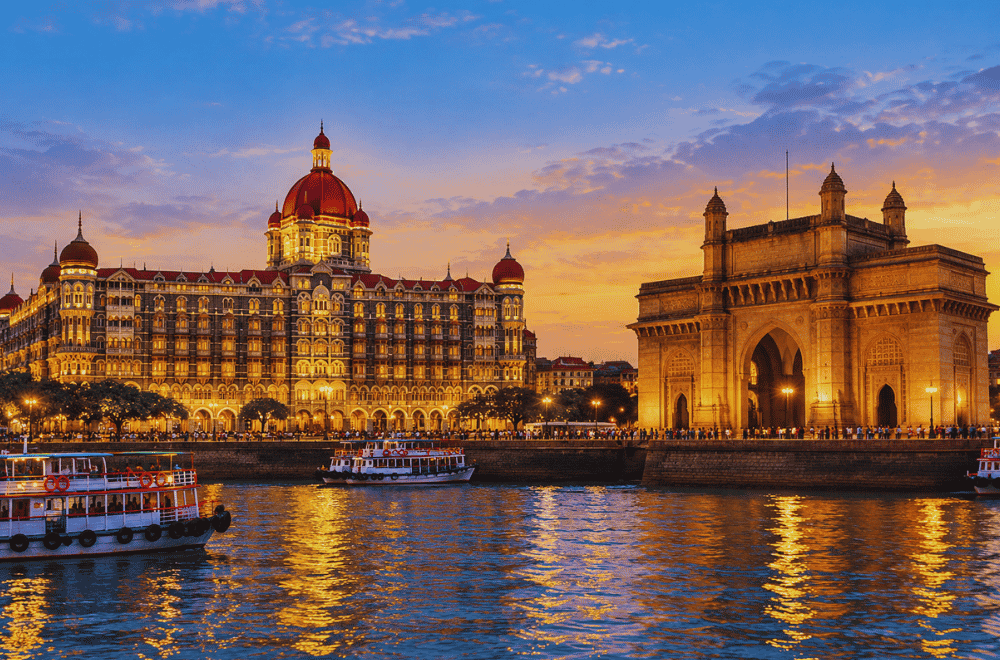
The Taj Mahal Palace opened in 1903 on the Mumbai waterfront, facing the Gateway of India. It is one of India’s most important heritage hotels, and it has been welcoming guests for well over a century.
Two buildings share the Taj name here: the 1903 Palace and a later Tower built alongside it. If history matters to you, the Palace wing is the one to request. The harbor-facing rooms look out across the water to the Gateway.
Not to be confused with the Taj Jai Mahal Palace in Jaipur, which is a different property in another city.
Best Luxury Hotels in Europe
Europe’s great hotels are about age, craft and place. Many have spent more than a century as the city’s unofficial living room.
7. The Ritz, Paris

In the late 1890s, a Swiss hotelier named César Ritz converted a private mansion at 15 Place Vendôme into the hotel that still carries his name. The hotel reopened in 2016 after a lengthy, major renovation, and it keeps its reputation as one of the most elegant addresses in Paris.
The Hemingway Bar is its famous drinking room, and the interiors are French in the grand style: gilded, formal and deliberately theatrical. The location puts you near the Tuileries, the Louvre and the best shopping streets.
8. The Savoy, London

The Savoy opened in 1889 on the Strand and reopened in October 2010 after a major refurbishment. It sits between Covent Garden and the Thames, which makes it unusually convenient for theatres and the river.
The American Bar is among the world’s best-known cocktail rooms. Savoy Court, the short entrance road, is often described as the only street in Britain where traffic drives on the right. Request a river-view room if the Thames matters to you.
9. Claridge’s, London

Claridge’s is a Mayfair institution, known for its Art Deco interiors and for hosting royalty and heads of state over many decades. It is quieter and more private in feel than the Savoy.
Afternoon tea in the foyer is a London ritual even for non-guests. If you want a hotel that feels like a very grand private house, this is a strong choice.
10. Hotel Danieli, Venice
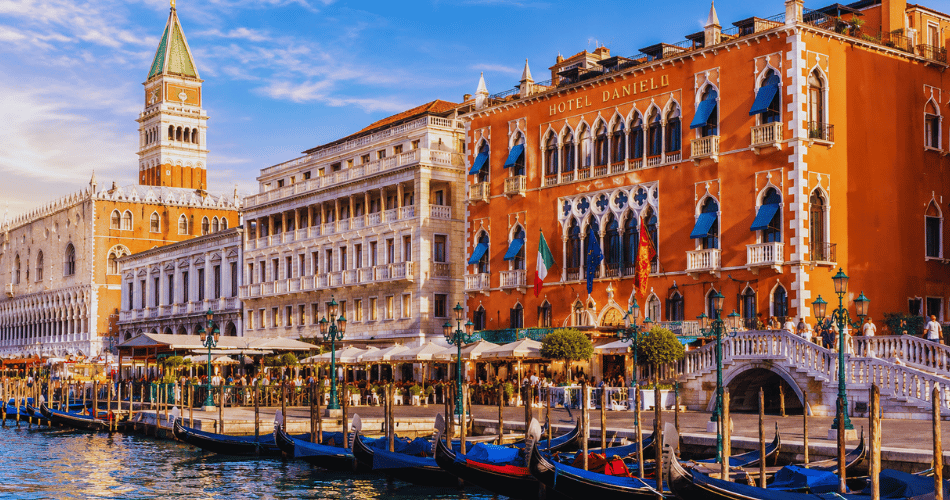
Hotel Danieli occupies a 14th-century Gothic palace beside St Mark’s, on the Riva degli Schiavoni waterfront. It has operated as a hotel since the early 19th century and is part of Marriott’s Luxury Collection.
The drama is in the building: a vaulted lobby, a grand staircase, and views across the lagoon. The main trade-off is that the oldest rooms are the most atmospheric, while newer wings are more modern. Ask which wing your room is in when booking.
Best Luxury Hotels in the USA
American luxury hotels range from Gilded Age landmarks to full-scale entertainment resorts. The contrast between New York and Las Vegas is the point.
11. The Plaza, New York
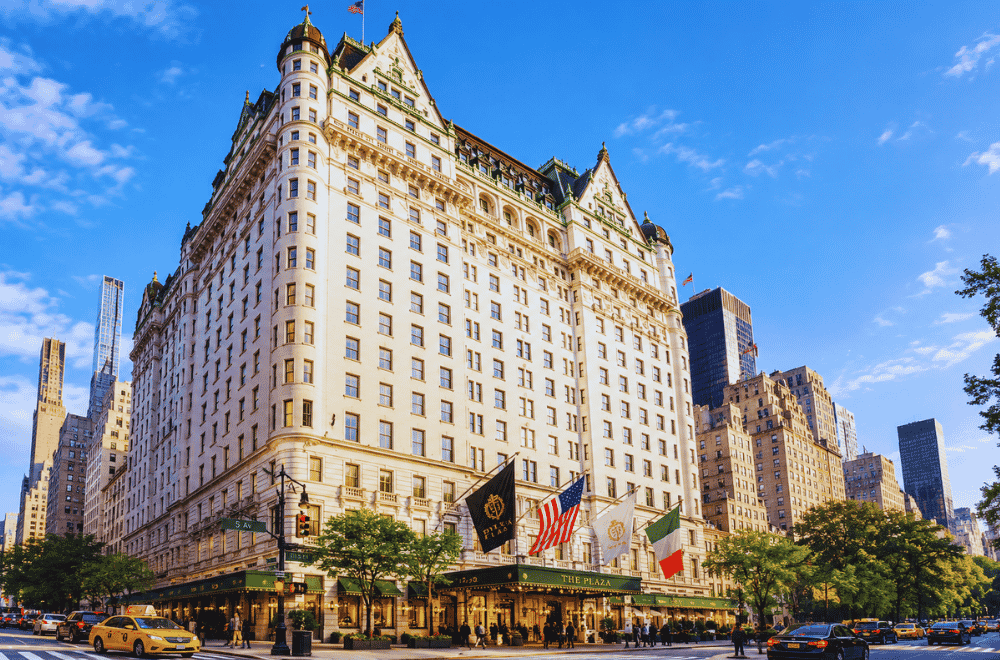
The Plaza opened in 1907 on Fifth Avenue, overlooking Central Park and Grand Army Plaza. It is one of New York’s defining landmarks, and its French Renaissance-style exterior is instantly recognizable.
Its location is hard to beat for first-time visitors: the park, Fifth Avenue shopping, and Midtown are all within a short walk. It also carries a pop-culture legacy, including the children’s character Eloise, who lived in its fictional penthouse.
12. Waldorf Astoria, New York

The Waldorf Astoria on Park Avenue opened in 1931 and is a landmark of Art Deco design. It closed for a long restoration and conversion, so its current room availability is worth confirming directly with the hotel before you plan around it.
Its place in New York history is secure: it has been a backdrop for political, diplomatic, and social events for generations. If the hotel’s current status matters to your trip, check the official Waldorf Astoria New York page first.
13. Bellagio, Las Vegas
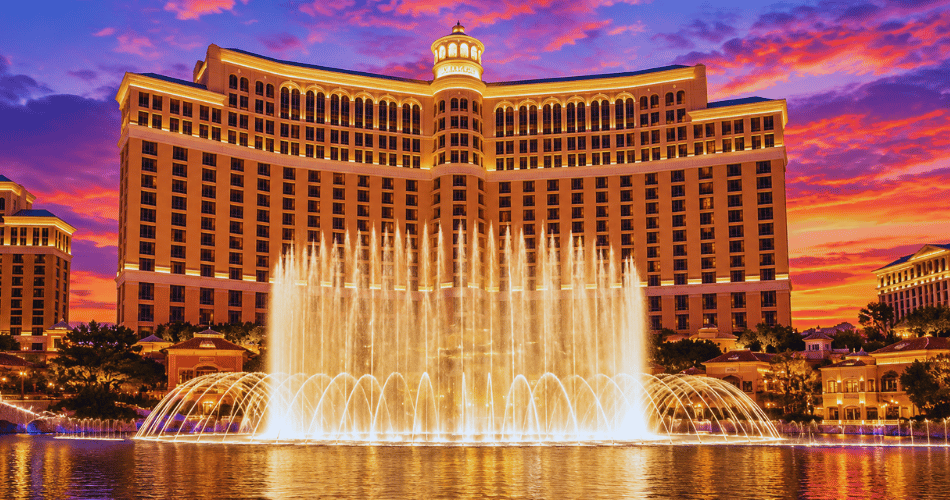
Bellagio opened in 1998 and is the Strip’s polished, Italian-inspired resort. The fountains out front are free to watch, and the Conservatory & Botanical Gardens inside change with the seasons.
It is a good pick if you want Las Vegas but prefer something more refined than the loudest casinos. Expect crowds and a large casino floor between your room and the lobby.
14. The Venetian, Las Vegas
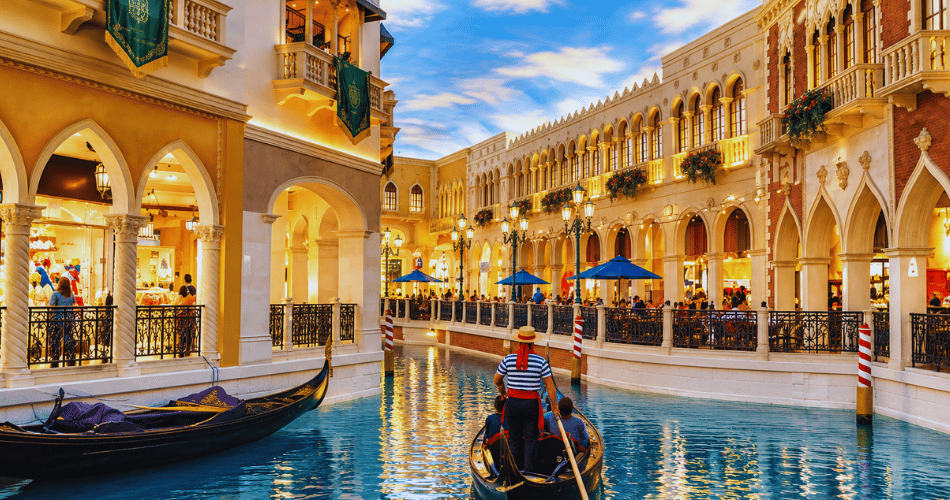
The Venetian opened in 1999 and is an all-suite resort themed on Venice, complete with indoor canals and gondola rides. The Grand Canal Shoppes are built to feel like a Venetian street.
Suites here are generally larger than standard Strip rooms, which is a real advantage if you are traveling as a group or want space. The Palazzo tower adjoins it, so it is easy to confuse the two when searching.
15. Fontainebleau, Miami

Fontainebleau Miami Beach opened in 1954 on Collins Avenue, designed by Morris Lapidus. It is a classic of mid-century resort architecture, and a major renovation in the 2000s brought it up to date.
It works best as a social, scene-oriented stay: big pools, a beachfront, and plenty of restaurants and nightlife. If you want quiet, ask for a room away from the main pool area.
Best Luxury Hotels by Travel Style
Picking from 15 great hotels is easier once you decide what the trip is for.
Best for Honeymoons
The Taj Mahal Palace, Mumbai, and Hotel Danieli, Venice, are the most romantic of the list because their buildings carry so much history. For a more spectacular, over-the-top setting, Burj Al Arab is the one couples remember.
Best for Families
Atlantis The Palm is the easiest choice: the waterpark and aquarium keep children busy. Fontainebleau, Miami, and the Venetian in Las Vegas also work well for families who want space and plenty to do.
Best for Shopping & Nightlife
Marina Bay Sands has a large mall and a lively waterfront. Bellagio and the Venetian put you in the center of Las Vegas nightlife, and the Ritz Paris is steps from some of the best shopping in Europe.
How to Choose a Luxury Hotel
Start with the trip, not the brand. A hotel that is perfect for a honeymoon can be wrong for a business week.
Location vs Amenities
A resort with excellent amenities can leave you far from a city’s sights, and a perfectly located city hotel may have a small pool. Decide which matters more. If you plan to be out all day, put location first; if the hotel is the destination, put amenities first.
Check what is included before booking. Resort fees, breakfast, airport transfers, and spa access vary widely between hotels and can change the real cost.
Best Time to Book for Deals
Luxury hotels rarely discount heavily in peak season, but shoulder seasons and mid-week stays often cost noticeably less. Booking early gives the best choice of suites, while last-minute offers sometimes appear when occupancy is low. Compare the hotel’s own site against a couple of booking platforms, and ask what a direct booking includes.
FAQs
What Is the Best Luxury Hotel in the World?
There is no single winner, because “best” depends on what you value. For history, the Ritz Paris, the Savoy and the Taj Mahal Palace are hard to beat. For spectacle, Burj Al Arab and Marina Bay Sands stand out. Published rankings differ from year to year.
Which Country Has the Best Luxury Hotels?
The United Arab Emirates, France, the United Kingdom and the United States all have strong claims. The UAE leads on modern spectacle, while France and the UK are home to some of the oldest great hotels.
How Much Does a Luxury Hotel Cost per Night?
It varies enormously by city, season, and room type, from several hundred dollars at the entry level to far more for suites at the most famous hotels. Because prices change daily, use the hotel’s official booking page for current rates.
What Is the Difference Between 5 Star and Luxury?
Star ratings usually measure facilities, such as a restaurant, a spa, and 24-hour service. “Luxury” describes the quality of the experience, including personalized service and design. Different rating systems use different criteria, so a 5-star label does not guarantee a luxury stay.
Are Luxury Hotels Worth the Price?
They can be, if you value service, location, and atmosphere enough to pay for them. For a milestone trip, a honeymoon, or a place with real history, many travelers feel the cost is justified. If you mostly use a hotel to sleep, a mid-range option may serve you better.
Final Thoughts
The best luxury hotels in the world each offer something different: spectacle in Dubai and Singapore, history in Paris, London and Mumbai, and scale in the United States. The right choice comes down to what you want from the trip, not a ranking.
As a next step, shortlist two or three, check live prices on the official sites, and confirm what is included before you book. Choose the dates first, then the hotel, since the best luxury hotels in the world fill quickly in peak season.

If you are reading Blue Horizon Hotel reviews, you are probably deciding whether this 4-star beachside hotel in Ialyssos, Rhodes, belongs on your summer shortlist. My short answer: it is a friendly, sociable, good-value base for a beach holiday, and a poor match if you want silence, a brand-new room, or a soft sandy shore. Guest opinion is fairly consistent, which makes the decision easier than most.
This article is built from published guest feedback and listing details from Tripadvisor and several booking sites, not from a personal stay. Where sources disagree, I say so. Hotel names repeat a lot around the world, so one note first: this guide covers the Blue Horizon Hotel in Ialyssos (also spelled Ialysos or Ialissos) on Rhodes, Greece, not the similarly named hotels in Barbados or Vancouver.
Blue Horizon Hotel Overview
“Blue Horizon Hotel Ialyssos Rhodes seen from the beach”
Ialyssos stretches along the northwest shore of Rhodes, and this hotel is only a short walk from the water. Nobody comes to this stretch of coast for clubs and late nights; the draw is wind, water, and easy days. The hotel has 222 rooms, a mix of rooms in the main building and bungalows set in gardens, and it operates as a seasonal beach resort. Many travelers book it through tour operators, though you can also reserve directly or through the usual booking sites.
Location & Nearby Attractions
“Ialyssos beach windsurfers near Blue Horizon Hotel”
Ialyssos is about 7 km from Rhodes Town, and sources put Rhodes Airport (Diagoras) at roughly 5 to 7 km, which keeps transfers short. The beach is a few minutes’ walk from the hotel; listings quote anywhere between about 80 and 140 meters, so treat it as “very close” rather than a precise figure. A minimarket and several bars and restaurants are also within walking distance.
For sightseeing, the medieval Old Town of Rhodes is the obvious day trip, and Filerimos hill, with its monastery and ancient ruins, is close to Ialyssos. Wind sports are the local specialty: the area is popular for windsurfing, and the hotel’s own beach bar sits right where the water sports happen.
Who Stays Here
Mostly European families, couples and groups of friends on a week or two of beach time. The reception team handles English, French, German, and Greek, which tells you where most guests come from. It also draws windsurfers, who like having the water a short walk away.
Rooms & Suites Review
Rooms are the hotel’s weakest-rated area in guest comments, and the reason is age, not neglect. Most complaints describe dated furniture and the odd maintenance fault rather than dirt.
Room Types & Sizes
“Blue Horizon Hotel sea view room with balcony”
Expect standard and superior rooms, family rooms, suites, and garden bungalows. Views are sold as sea, pool, garden, or mountain. Rooms generally have a balcony or terrace, air conditioning, a fridge, a kettle, a safe, and a TV, and superior rooms add a bath and bathrobes where standard rooms have a shower. Official square meterage varies by room, so check the exact size on your booking page.
One detail matters for shoulder-season trips: air conditioning is listed as running from 1 June to 30 September. If you travel outside that window, ask what is available.
Cleanliness & Comfort
Cleanliness is the strongest score on the hotel’s Tripadvisor page, at 4.4 out of 5, and guests mention daily cleaning and fresh towels. Housekeeping is singled out for praise more often than any other team.
Comfort scores are lower. Sleep quality is the weakest sub-rating at 3.9, and reviewers mention tired furnishings and, in one case, a broken elevator. None of that is unusual for an older resort, but it is why this is a hotel to book for the location and value, not for the rooms.
Views & Noise Levels
Sea-view rooms carry a higher price, and a handful of reviewers felt they got a different outlook from the one they paid for. Email your request ahead of arrival and keep the reply, so you have something to show at the desk if the room turns out wrong.
Noise comes from two places: aircraft on the nearby flight path and evening entertainment. Some guests barely notice either; others find them irritating. Asking for a room away from the bar and entertainment area is a sensible move if you are a light sleeper.
Facilities & Amenities Review
The facilities are built around the pool and the sea, with a reasonable activities list for a 4-star property.
Pool & Beach Access
“Blue Horizon Hotel outdoor pool with sun loungers”
There is an outdoor pool with loungers and parasols, plus a separate children’s pool. Pool towels are a recurring complaint, so ask how the policy works on arrival.
The beach is where opinions split. Listings describe a sandy Ialyssos beach, while guests report a pebbly shoreline that makes getting into the sea awkward, and sunbeds and umbrellas on the beach cost extra. Bring water shoes, and budget for loungers if you plan to spend your days on the sand. The hotel runs the Surfers beach bar there, which is convenient for lunch and drinks.
Spa & Fitness Centre
This is not a spa hotel. Listings mention massage services, which cost extra, but I found no sign of a full spa with a thermal area or treatment menu. There is a gym, and table tennis, volleyball, basketball, and darts are free. Tennis and billiards are charged.
If a proper spa is non-negotiable, look at other Rhodes resorts; Kalithea Horizon Blu, for example, is a separate adults-only hotel in a different part of the island.
Wi-Fi & Business Facilities
Sources disagree on Wi-Fi: Tripadvisor and one tour operator list it as free, while another booking site lists it as a chargeable extra. Confirm before you travel if you plan to work remotely. The hotel has a 24-hour reception and lists conference facilities, but it is a leisure resort, not a business hotel, and I would not choose it for a work-heavy trip.
Dining & Breakfast Review
Food is where this hotel quietly earns its good reviews, particularly with half-board and all-inclusive guests.
Restaurant Quality
“Pandora restaurant buffet at Blue Horizon Hotel”
The main restaurant, Pandora, serves buffet-style Greek and international food. Guests praise the variety and say menus change from day to day, and one reviewer specifically credited good allergy labeling.
The complaints are practical. Drinks are often not included with half board, and a few guests felt dining-room service was rushed at peak times. The Blue Moon bar and the Surfers beach bar fill in the gaps for snacks and drinks.
Breakfast Options
“Breakfast buffet at Blue Horizon Hotel Rhodes”
Breakfast is served in Pandora. Whether it is included depends entirely on the rate you book, so do not assume it is. Half board has been listed as breakfast and dinner, and all-inclusive adds lunch, snacks, and drinks, but one operator notes these details come from the previous season and can change.
Service & Staff Review
Service gets good marks overall, with one weak spot at reception.
Check-In & Check-Out
Guest write-ups rarely mention the clock times for arriving or leaving, so email the hotel for them before you travel. A desk that never closes is handy when a flight touches down after midnight. The grumbles that do appear are about queuing at the desk and being handed a different room than the one reserved.
Staff Helpfulness
Housekeeping and dining-room staff are the team most often thanked by name. Reception is more mixed: some guests describe it as friendly, others as unhelpful. If something goes wrong, calmly asking for the duty manager tends to work better than repeating the request at the desk.
What Guests Say
The best overview comes from Tripadvisor, where the hotel scores 4.0 out of 5 from 712 reviews and ranks in the upper-middle of Ialyssos hotels. Its page also shows a 2026 Travelers’ Choice badge. Sub-ratings run from 4.4 for cleanliness and 4.3 for location, down to 4.0 for rooms and value and 3.9 for sleep quality. Check the live page for current numbers.
Top Positive Reviews
- Friendly, hard-working staff, especially housekeeping and the dining room
- Clean rooms with daily service
- Varied food that changes through the week
- A relaxed atmosphere, sea views and a beach within walking distance
- Good value on all-inclusive or half-board bookings, with lively daytime and evening entertainment
Common Complaints
- Sunbeds and umbrellas on the beach cost extra, and the beach itself is pebbly.
- Drinks are often excluded from half board
- Inconsistent reception service
- Aircraft and evening music noise
- Dated rooms and occasional maintenance faults
- Limited entertainment for very young children on some stays
Taken together, these Blue Horizon Hotel reviews describe an honest mid-range resort. Nothing in them suggests a bad hotel, and the complaints are mostly about age and extras, not about hygiene or safety.
Pros & Cons
What We Liked
- The location: a short walk to the water, with a minimarket nearby
- Cleanliness and the housekeeping team
- Food variety for the price
- A children’s pool and family-friendly rooms
- Easy access to Rhodes Town and the airport
What Could Be Better
- Room furnishings that need refreshing
- Beach comfort, given the pebbles and paid sunbeds
- Reception consistency
- Noise from aircraft and entertainment
- Clearer information on Wi-Fi and board inclusions
Value for Money
The hotel’s value reputation is strong, and it mostly rests on package pricing. Guests who book all-inclusive or half board through a tour operator tend to be the happiest.
Room Rates & Best Booking Time
I haven’t quoted a nightly price because none of the sources I checked showed a reliable current one. What you pay will move with the month, the room, and whether meals are bundled, so price the same dates on the hotel’s page and at least two booking sites before you commit. Rhodes is busiest in the summer months, so booking early gives the best choice of sea-view rooms and flights. Compare room-only against half board, because drinks are often extra and can change the real cost. Free cancellation, where offered, is worth paying a little more for.
Is It Worth the Price?
For most beach holidaymakers, yes. You are paying for location, a friendly team, decent food and a lively atmosphere, not for polished rooms.
If you are sensitive to noise, want a calm adults-only retreat, or expect a soft sandy beach, the answer changes. In those cases, a quieter horizon beach hotel or boutique resort elsewhere on the island may suit you better.
Who Should Stay at Blue Horizon Hotel
Couples & Honeymooners
It works for couples who want a sociable beach holiday with good food and some activities. For a romantic honeymoon, it is less ideal, since the mood is relaxed and family-oriented rather than secluded or adults-only. Pick a sea-view room and request a quieter location.
Families
“Family at the children’s pool, Blue Horizon Hotel”
Families are probably the strongest match. There is a children’s pool, family rooms and rooms that sleep three, and an activities program. The one caution: some guests felt entertainment for very young children was thin on certain stays, so ask about the current schedule if your kids are small.
Solo & Business Travelers
Solo travelers will find it easy to meet people, and the 24-hour reception is reassuring. Business travelers should think twice, given the seasonal resort setting and the inconsistent Wi-Fi information.
FAQs
Is Blue Horizon Hotel Good?
Yes, for the right traveler. A 4.0 Tripadvisor score from 712 reviews points to a solid, mid-range beach hotel with good cleanliness, friendly staff, and fair value. Its weak points are dated rooms, some noise, and a pebbly beach.
Is Blue Horizon Hotel Family-Friendly?
Yes. It has a children’s pool, family rooms, and a daily activities program. Check what is currently offered for toddlers and younger children before you book.
Is Breakfast Included?
It depends on your rate. Breakfast is served in the Pandora restaurant and is included in half-board and all-inclusive plans. Room-only bookings may not include it, so confirm on your reservation.
How Far Is It from the Airport?
Sources say it’s roughly 5 to 7 km to Rhodes Airport, so a private taxi is quick. Shared package-holiday transfers can take longer, and one operator quotes about 30 minutes to the resort.
What Is the Best Time to Book?
Book early for summer, when Rhodes is busiest, and sea-view rooms go first. If you prefer cooler weather, remember that air conditioning is listed from 1 June to 30 September, so ask about facilities outside those dates.
Final Thoughts
“Sunset over Ialyssos Rhodes near Blue Horizon Hotel”
After comparing the available Blue Horizon Hotel reviews, the picture is consistent. This is a clean, friendly, good-value beach hotel on Rhodes with decent food and an easy location, held back by older rooms, some noise, and a pebbly beach.
Before you book, confirm four things on the official page or with the hotel: Wi-Fi charges, your board basis, your room view, and the beach sunbed policy. If those fit your plans, the Blue Horizon Hotel is a safe, sensible choice for a family or friends’ holiday. If you want silence, luxury, or a spa, look elsewhere on the island.

Tourist attractions in Istanbul sit closer together and cover more history than almost any other city you could visit in a single trip. Walk five minutes in Sultanahmet, and you’ll pass a Byzantine cathedral turned mosque, an Ottoman sultan’s palace, and an underground cistern that once supplied water to the whole city. This guide sorts the best places to visit in Istanbul by type, flags what’s changed recently (Hagia Sophia’s ticketing rules trip up more visitors than anything else in the city), and tells you which sites are worth booking ahead.
If you only have time for the short version, here it is: Hagia Sophia, the Blue Mosque, Topkapi Palace, the Basilica Cistern, the Grand Bazaar, a Bosphorus cruise, Galata Tower, and an evening walk down Istiklal Street or along the Ortaköy waterfront. Everything below explains why each one earns its place and how to visit without losing half a day standing in line.
Why Istanbul Is a Must-Visit Destination
Istanbul is the only major city in the world that straddles two continents, and that isn’t just trivia. The Bosphorus Strait cutting through the middle of it has shaped the city’s trade, architecture, and politics for over 1,500 years, first as Constantinople and then as the seat of the Ottoman Empire. You can feel that layered history physically, since a Byzantine church, an Ottoman mosque, and a modern rooftop bar can all sit within sight of each other.
It’s also, refreshingly, still a working city rather than a museum piece. The Grand Bazaar isn’t recreated for tourists; it’s been operating since the 15th century. That mix of genuine daily life and heavyweight history is what keeps people coming back after their first visit.
Best Time to Visit Istanbul
April, May, September, and October are the strongest months: mild temperatures, manageable crowds, and enough daylight to fit in a full day of sightseeing plus an evening walk. Summer (June to August) brings heat, humidity, and the year’s biggest crowds at Sultanahmet’s major sites. Winter is quieter and cheaper, though colder and wetter, and some Bosphorus cruise schedules run less frequently.
How Many Days You Need
Three days covers the essentials at a reasonable pace: one day for Sultanahmet’s historic core, one for the bazaars and a Bosphorus cruise, and one for Beyoğlu and the Asian side. Two days is workable if you’re disciplined about pre-booking tickets, but you’ll likely have to choose between the bazaars and the Asian side. Five days or more lets you slow down, add a hammam visit, and explore neighborhoods without a fixed itinerary.
Best Historical & Religious Attractions
This is the part of Istanbul most people come for, and it’s also where planning saves the most time.
Hagia Sophia

Hagia Sophia has been a church, a mosque, a museum, and since 2020, a mosque again, and each version left its mark on the building. The ground-floor prayer hall is open to everyone at no cost, but the upper gallery, where the famous Byzantine mosaics are, now requires a separate €25 ticket for foreign visitors, a system introduced in January 2024. The Istanbul Museum Pass does not cover this fee, which catches out a lot of visitors who assume it does.
Buy your ticket online in advance, use the tourist entrance on the northeast side of the building rather than the Sultanahmet Square door, and check prayer times before you go, since tourist access pauses for all five daily prayers and closes for an extended period around Friday midday prayer.
One more trap: the “Hagia Sophia History and Experience Museum” is a separate building a few minutes’ walk away, with its own €25 ticket. Several visitors have paid for it thinking it was entry to the mosque, so check the listing carefully before you pay.
Blue Mosque (Sultan Ahmed Mosque)
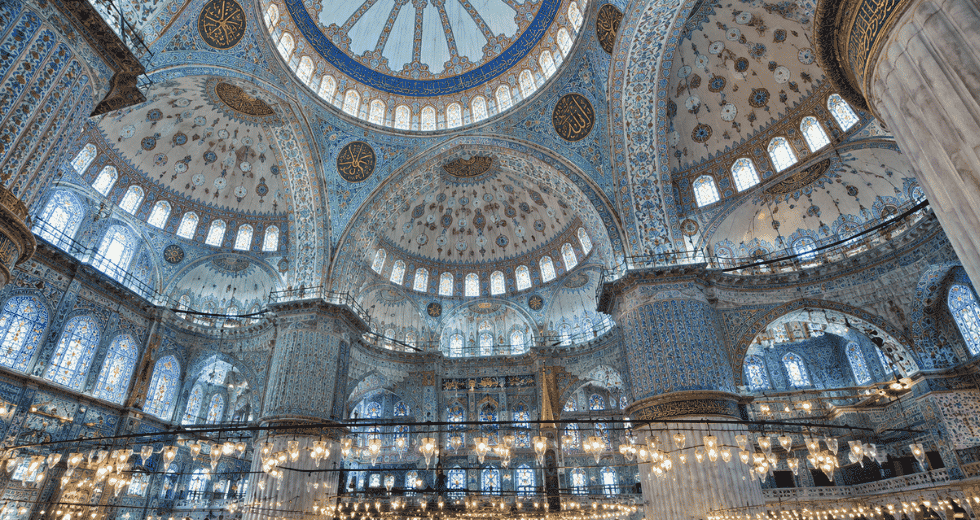
Named for the blue Iznik tiles lining its interior, the Blue Mosque remains free to enter outside prayer times, though as an active mosque it follows the same access rules as Hagia Sophia. Modest dress is required for everyone: shoulders and knees covered, and a headscarf for women, with loaner coverings usually available at the entrance if you forget your own. Visiting right after morning prayer tends to be the calmest window before tour groups arrive.
Topkapi Palace

Topkapi Palace was the primary residence of Ottoman sultans for roughly 400 years, and its courtyards, treasury, and imperial kitchens give a genuinely vivid sense of how the empire actually ran day to day. The Harem section requires a separate ticket and is worth the extra cost, since it’s where a lot of the palace’s real political intrigue played out. Go early; the palace’s popularity means long queues form quickly once tour buses arrive mid-morning.
Basilica Cistern

Built in the 6th century under Byzantine emperor Justinian, the Basilica Cistern is an underground reservoir supported by hundreds of columns, several salvaged from earlier Roman structures. The two carved Medusa head column bases near the back are the most photographed detail, and the cistern’s cool, dim atmosphere makes it a welcome break from Istanbul’s summer heat. It’s smaller than people expect, so it pairs well with Hagia Sophia and the Blue Mosque as one combined Sultanahmet morning.
Best Markets & Shopping Attractions
Istanbul’s markets are as much a sightseeing experience as a shopping trip, even if you don’t buy anything.
Grand Bazaar

One of the oldest and largest covered markets in the world, the Grand Bazaar has been trading since the 1450s and now holds thousands of shops across a maze of covered streets. Bargaining is expected, not rude, and the starting price is rarely the real price, so treat the back-and-forth as part of the experience rather than an obstacle. Go with a rough idea of what you want, since wandering without a plan can eat an entire afternoon.
Spice Bazaar
Smaller and easier to navigate than the Grand Bazaar, the Spice Bazaar (also called the Egyptian Bazaar) is built around stalls selling spices, Turkish delight, teas, and dried fruit, with the smell alone worth the visit. It sits right next to the New Mosque and the Galata Bridge, making it easy to combine with a walk along the Golden Horn waterfront.
Istiklal Street
Istiklal Street is Istanbul’s main pedestrian boulevard, running from Taksim Square down toward Galata Tower, lined with shops, cafés, and a restored historic tram that still runs its length. It’s at its liveliest in the early evening, when the street fills with both locals and visitors, and it’s a natural jumping-off point for exploring Beyoğlu’s side streets.
Best Waterfront & Scenic Attractions
The Bosphorus itself is arguably Istanbul’s biggest attraction, and several sights are built around taking it in properly.
Bosphorus Strait Cruise
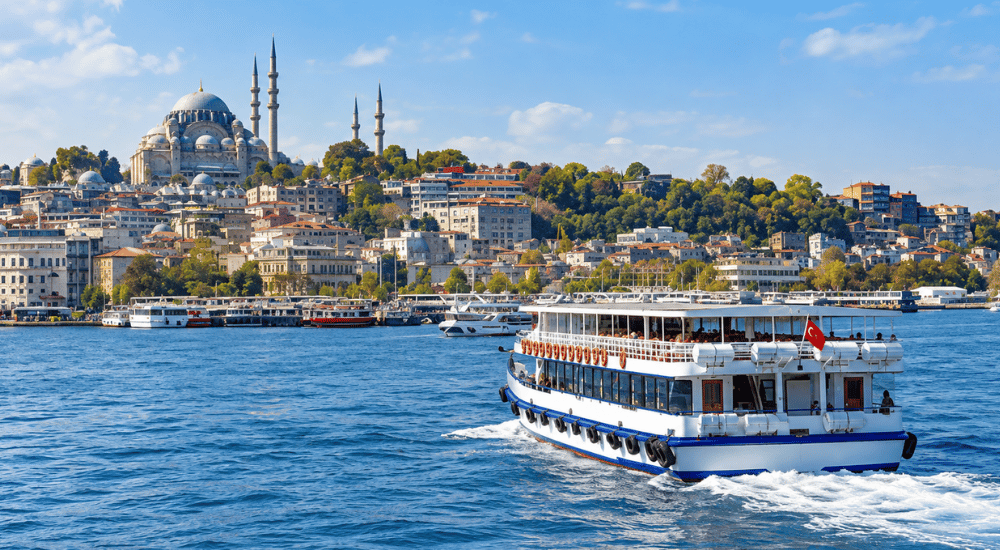
A Bosphorus cruise gives you a view of the city that’s genuinely impossible to get on foot: waterfront palaces, fortresses, and the bridges connecting Europe and Asia, all from the water. Public ferries run affordable, scenic routes if you just want the view, while private or sunset cruises add commentary and sometimes dinner. Either way, this is one attraction where booking a few hours ahead, rather than showing up and hoping, tends to get you a better spot on deck.
Galata Tower

Built in the 14th century by the Genoese, Galata Tower offers one of the best panoramic views over Istanbul’s old city and the Bosphorus, and it’s a shorter, less crowded alternative to some of the city’s other viewpoints. Sunset is the busiest time for obvious reasons, so an earlier visit trades a bit of golden light for noticeably thinner crowds.
Ortaköy Mosque & Waterfront
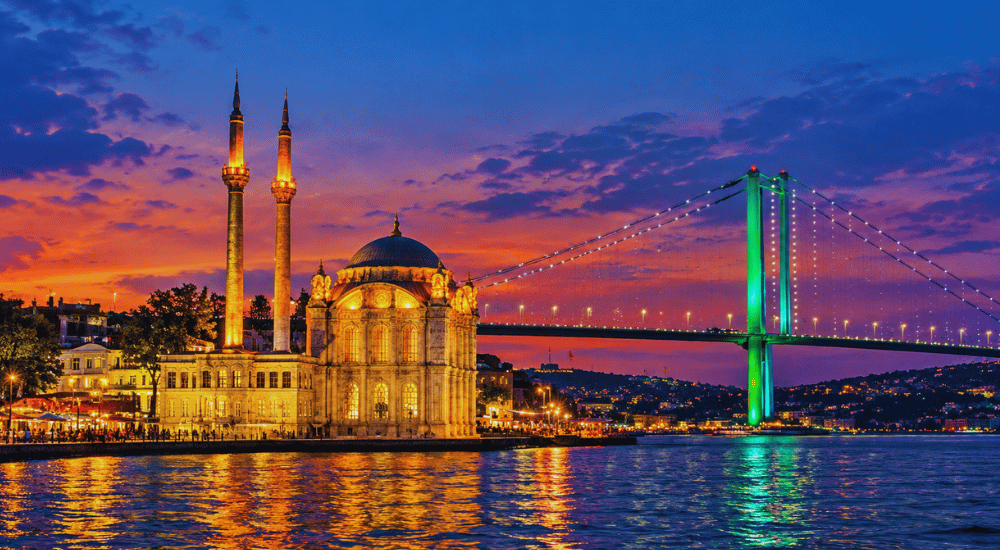
Ortaköy’s small Baroque-style mosque sits directly on the Bosphorus, right beneath the Bosphorus Bridge, making it one of the most photographed spots in the city. The neighborhood around it is relaxed and café-heavy, known locally for kumpir (loaded baked potatoes) sold from waterfront stalls, and it’s a good stop for an evening that doesn’t revolve around a formal sit-down meal.
Best Neighborhoods to Explore
Beyond the individual sights, these three districts show different sides of how Istanbul actually lives.
Sultanahmet
Sultanahmet is the historic core where most of the big-name attractions cluster, which makes it convenient but also the most touristy and most expensive part of the city. Staying here saves walking time between sights, though eating a street away from the main square generally gets you better food for less money.
Karaköy
Karaköy, on the European side near the Galata Bridge, has shifted in recent years from a working port district into one of Istanbul’s more interesting food and design neighborhoods, with a mix of old hardware shops and new cafés. It’s a good base if you want to be central without paying Sultanahmet’s premium, and it’s an easy walk to both Istiklal Street and the ferry docks.
Kadıköy (Asian Side)

Crossing to Kadıköy by ferry is worth doing even just for the ride, and the neighborhood itself has a noticeably more local, less touristy feel than the European side’s major sights. Its Tuesday market, seafood restaurants, and bar-filled backstreets give a genuine sense of how a lot of Istanbullus actually spend a weekend, away from the Sultanahmet crowds entirely.
Tips for Visiting Istanbul’s Attractions
A handful of habits make the difference between a smooth trip and a frustrating one.
Best Time to Avoid Crowds
Arrive at opening time for Topkapi Palace, Hagia Sophia, and the Basilica Cistern, since all three get noticeably busier once mid-morning tour groups arrive. For the Blue Mosque, visiting shortly after a prayer period tends to be calmer than the hour leading up to the next one. Evenings work best for Istiklal Street, Ortaköy, and the Bosphorus waterfront generally.
Skip-the-Line Tickets & Tours
Book Hagia Sophia’s upper gallery ticket and Topkapi Palace tickets online in advance; both routinely form long queues by mid-morning in high season. The Istanbul Museum Pass covers many of the city’s major museums and palaces but notably not Hagia Sophia, so check exactly what’s included before assuming it covers everything on your list. A guided tour adds real value at Topkapi Palace and the Basilica Cistern, where context changes the experience considerably, while the bazaars and waterfront neighborhoods are better explored independently.
Budgeting for Istanbul Travel
Istanbul is generally affordable compared to major Western European capitals, particularly for food and public transport, though entry fees at sites like Hagia Sophia and Topkapi Palace have risen in recent years as ticketing systems have changed. Because prices are often set or adjusted in euros while daily costs are paid in lira, it’s worth checking current exchange rates and official site pricing shortly before your trip rather than budgeting off older figures.
FAQs
What Is Istanbul’s Most Famous Attraction?
Hagia Sophia is generally considered Istanbul’s single most famous attraction, given its nearly 1,500-year history spanning Byzantine and Ottoman rule, though the Blue Mosque and Topkapi Palace both draw comparable name recognition internationally.
Is Istanbul Safe to Visit?
Istanbul is generally safe for tourists, and the most common issue is petty theft and pickpocketing in crowded areas like the Grand Bazaar, public transport, and Sultanahmet’s main sites, rather than more serious crime. Standard precautions apply, and it’s worth checking your government’s current travel advisory before you go, since guidance can shift.
Best Time of Year to Visit Istanbul?
Spring (April and May) and early autumn (September and October) offer the best combination of comfortable weather and manageable crowds. Summer is hot and busy, while winter is quieter and less expensive but colder and wetter.
How Many Days Do You Need to See Istanbul?
Three days covers the main highlights at a comfortable pace, and five days or more allows time to explore neighborhoods like Kadıköy and Karaköy without rushing. Two days is possible if you pre-book tickets and accept you’ll have to skip something.
Do I Need a Visa to Visit Turkey?
It depends on your nationality. Many nationalities, including the UK, US, and Canada, currently enter visa-free for short tourist stays, while numerous other nationalities need to apply for an e-Visa online in advance through Turkey’s official e-Visa portal, and a smaller number need a visa from a Turkish embassy or consulate. Because these rules vary by nationality and do change, confirm your specific requirement on the official e-Visa website before booking flights.
Top Tourist Attractions in Istanbul: Final Thoughts
The best tourist attractions in Istanbul reward a bit of planning: book Hagia Sophia and Topkapi Palace ahead, budget for entry fees that have shifted in recent years, and leave room in your schedule for neighborhoods like Karaköy and Kadıköy, where the city feels less like a checklist and more like itself. Istanbul rarely disappoints, but it does reward travelers who show up with a plan rather than winging it in Sultanahmet’s midday crowds.
As a next step, choose your dates, book timed tickets for Hagia Sophia’s upper gallery and Topkapi Palace first, and confirm your visa requirements on Turkey’s official e-Visa site before you finalize flights, since fees and entry rules for both have changed more than once in recent years.

Keio Plaza Hotel Tokyo: Latest Reviews & Guide

Apex Waterloo Place Hotel, Edinburgh: Rooms & Review

InterContinental Hotel Reviews 2026: Worth It?

Best Luxury Hotels in the World: Top 15 Picks

Blue Horizon Hotel Reviews 2026: Is It Worth It?

Best Pakistan Visitor Guide 2026: What to Know

10 Top Tourist Attractions in Rome
InterContinental Hotel Reviews 2026: Worth It?
Best Luxury Hotels in the World: Top 15 Picks
Blue Horizon Hotel Reviews 2026: Is It Worth It?
-

 Travel Guides4 months ago
Most Beautiful Places in Pakistan: Travel Guide
-

 Destinations4 months ago
Best holiday destinations in Rome
-

 Destinations4 months ago
Florence: Most Beautiful Places
-

 Destinations4 months ago
20 Best Places to See in Dubai
-

 Destinations4 months ago
Cinque Terre: Most Beautiful Places in the World
-

 Top Attractions4 months ago
Most Beautiful Places to Visit in London
-

 Destinations4 months ago
One of the World’s Best Tourist Places: Istanbul
-

 Destinations3 months ago
Top 20 Best Places to Travel Alone